
Connecticut Audit Confirms OVG Bypassed Bidding Rules for Ticketmaster Deal at Hartford’s XL Center
The state authority later selected AXS after evaluating three ticketing companies, reinforcing a Hartford example used by plaintiffs in the…
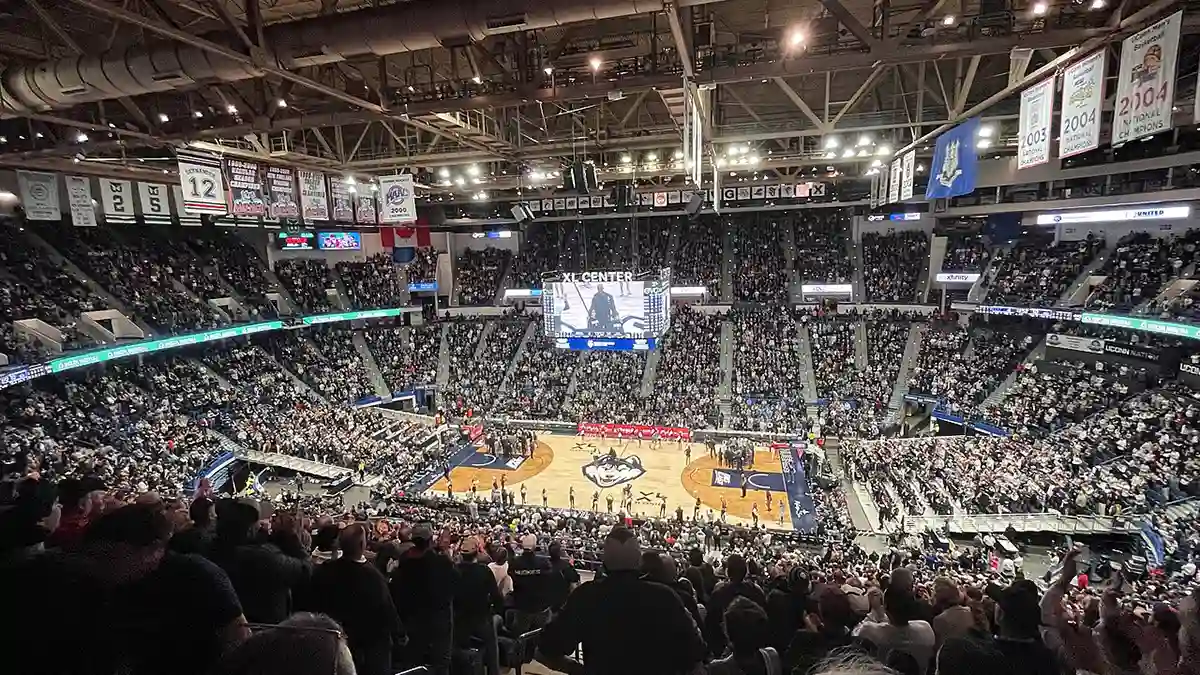
The state authority later selected AXS after evaluating three ticketing companies, reinforcing a Hartford example used by plaintiffs in the Live Nation antitrust trial.
Oak View Group entered a concert-ticketing agreement with Ticketmaster for Hartford’s XL Center without obtaining required approval from the state authority overseeing the arena or completing the contractually mandated bidding process, according to a newly released Connecticut audit.
The July 2023 agreement was executed while the building was still known as the XL Center, before its renaming as PeoplesBank Arena. OVG was acting as the arena manager and agent of the Capital Region Development Authority, or CRDA, which oversees the publicly controlled facility.
State auditors found that OVG failed to solicit the required minimum of three proposals, awarded the agreement without proper CRDA approval and omitted legally required contracting documents. The agreement, structured around variable fees and revenue sharing, had an annual value exceeding $50,000.
The audit itself referred only to an unnamed third-party vendor. Auditors subsequently confirmed to the New Haven Register that the agreement was with Ticketmaster and that OVG received two bids before selecting the Live Nation-owned ticketing company.
“Acting as a steward for CRDA, OVG entered into a sub-agreement with Ticketmaster for concerts,” the auditors told the newspaper. “OVG did not receive CRDA permission to do this.”
The finding is particularly notable because the Hartford contract was previously presented in federal court as a specific example of OVG steering a managed venue toward Ticketmaster under a paid advocacy agreement that has become a central component of the antitrust case against Live Nation and Ticketmaster.
OVG Failed to Follow Contracting Requirements
CRDA originally contracted with Global Spectrum in 2013 to manage the XL Center and Rentschler Field. OVG acquired Global Spectrum in 2021 and assumed its management responsibilities.
Under that management agreement, contracts worth more than $50,000 annually were required to be competitively bid and approved by CRDA. Ticketing agreements were specifically subject to CRDA approval and applicable state contracting standards.
Auditors found that OVG did not obtain the required minimum of three bids before executing the Ticketmaster contract. It also failed to secure proper authorization from CRDA.
The contract was missing a state campaign-contribution certificate, required gift disclosures and nondiscrimination provisions. Auditors attributed the deficiencies to a “lack of managerial oversight” and recommended that CRDA improve its monitoring of OVG’s compliance with the management agreement.
CRDA agreed with the recommendation but noted that it had identified the problem and reported it to the state auditors.
“CRDA proactively identified this issue for the state auditors and took steps to resolve the matter directly with the management company,” the authority said in a statement provided to the New Haven Register. CRDA said it has since established tighter contract-compliance procedures.
The audit does not examine why OVG preferred Ticketmaster, whether the two proposals were evaluated on equivalent terms or whether the Hartford agreement affected any payments OVG received under its separate national deal with Ticketmaster.
Those questions, however, were directly implicated by evidence presented in the federal antitrust case.
Hartford Contract Surfaced During Live Nation Trial
The Justice Department and dozens of states alleged in their 2024 antitrust complaint that Live Nation and OVG had developed an unusually close relationship designed to limit competition in concert promotion, venue operations and ticketing.
A 2022 agreement made Ticketmaster the exclusive primary ticketing provider for OVG-owned venues while requiring OVG to “advocate for” exclusive Ticketmaster contracts at more than 100 venues it managed for other owners. The agreement also applied to future OVG-managed venues.
The government alleged that the arrangement allowed OVG to influence which ticketing companies were invited to compete for contracts while receiving substantial compensation from Ticketmaster. OVG projected that it would convert at least 22 venues to Ticketmaster over four years, according to the amended complaint.
Documents later obtained through a separate OVG non-prosecution agreement showed that Ticketmaster paid OVG $20 million upfront and agreed to approximately $7 million in annual payments tied to the arrangement. TicketNews previously reported that the payments were not disclosed to the venue clients for whom OVG was managing ticketing decisions.
The Hartford agreement became a specific exhibit in that broader case.
In an April filing summarizing evidence presented at trial, state plaintiffs said OVG CEO Chris Granger testified that Ticketmaster had agreed to pay OVG $70 million over ten years, in addition to a $20 million signing payment, to advocate for Ticketmaster at more than 200 OVG-managed venues.
The states alleged that OVG used the arrangement to steer managed venues toward Ticketmaster without competitive bidding that would have allowed AXS and other platforms to compete fully for the business. They pointed to the XL Center as a direct example.
“At the XL Arena in Hartford, Connecticut, OVG in 2023 steered an exclusive ticketing contract to Ticketmaster without obtaining competitive bids,” the states wrote, citing testimony from Granger.
The filing said that after Hartford officials learned about the process, bidding was reopened without OVG controlling the RFP. AXS then won by offering the XL Center better economic terms than Ticketmaster, according to testimony cited by the states.
The state filing referred to the facility as “XL Arena” and attributed the reopened process to the City of Hartford. The facility was known as the XL Center, and CRDA’s own records identify the state authority as the entity that evaluated the proposals and selected AXS.
Live Nation disputed the states’ interpretation of the OVG agreement. The company argued that paying a venue manager to advocate for Ticketmaster was not inherently anticompetitive and that OVG was not required to recommend Ticketmaster when a competing platform presented a better offer. Live Nation pointed to OVG-managed venues that ultimately selected AXS as evidence that the agreement did not prevent venue choice.
The states responded that OVG’s contractual obligation to advocate for Ticketmaster still distorted the selection process, even when a competing company was ultimately able to overcome that advocacy. During his testimony, Granger acknowledged that OVG was required to advocate for Ticketmaster’s perceived benefits.
The Connecticut audit does not resolve the larger antitrust question or establish that OVG’s national incentive agreement caused the Hartford procurement violations. It does, however, independently confirm the core underlying facts: OVG selected Ticketmaster without meeting the required bidding threshold, lacked authorization from its public-sector client and entered the agreement without required state-contracting documentation.
CRDA Selects AXS After Three-Company Review
CRDA’s board formally selected AXS as the arena’s ticketing platform in June 2025 following a process involving three companies.
Meeting minutes show that the review committee considered each company’s experience, products, capabilities and financial terms. Committee members concluded that all three bidders were capable of serving PeoplesBank Arena and the Hartford Wolf Pack.
The review also considered what CRDA described as the “external environment,” including national ticketing regulation, legal issues and legislative developments.
CRDA’s board approved a recommendation selecting AXS and instructed OVG to negotiate an acceptable agreement with the competing platform.
The minutes do not identify the other two bidders, provide scoring information or explicitly state that the process was initiated because of the deficient 2023 Ticketmaster agreement. They nevertheless confirm that CRDA subsequently conducted the three-company review that had been missing when OVG contracted with Ticketmaster.
The arena now uses AXS as its primary building ticketing platform. Its website directs buyers to AXS for general events and provides instructions for accessing, transferring and reselling AXS mobile tickets.
The facility remains a mixed-platform venue, however. UConn Athletics continues to sell and distribute tickets through its own Paciolan-powered ticketing operation rather than through the arena’s AXS system.
Proposed Settlement Directly Targets OVG Agreement
The proposed federal settlement between the Justice Department, Live Nation, Ticketmaster and six states includes provisions specifically designed to dismantle the OVG arrangement.
Under the proposed final judgment, Live Nation and Ticketmaster must terminate the July 1, 2022 Ticketing Services Incentive Agreement with OVG.
Ticketmaster would also be required to contact every OVG-managed—but not OVG-owned—venue that entered a Ticketmaster contract on or after July 1, 2022. Those venues would have to be told about the OVG agreement and all associated payments, including the $20 million payment made in 2022.
Each affected venue would then have the option to conduct a new RFP for its Ticketmaster contracts without penalty. Future agreements that compensate a facility manager for converting a venue to Ticketmaster would be prohibited.
The 2023 XL Center agreement appears to fall within the category the provision was written to address: a Ticketmaster contract signed after July 2022 for a publicly controlled venue managed, but not owned, by OVG.
Connecticut effectively implemented the settlement’s contemplated corrective measure before the proposed final judgment was published. Once CRDA conducted a process involving three competing companies, the building selected AXS—and state plaintiffs said the rival platform offered better economics than Ticketmaster.
That result does not establish that AXS will always outperform Ticketmaster or that OVG’s advocacy agreement dictated the original selection. It does illustrate the competitive concern at the center of both the audit and the antitrust case: a ticketing competition cannot protect a venue or the public it serves when the agent managing that competition does not follow the required process.
Read next
More headlines

Sep 19, 2026
Ed Sheeran Tour Fallout Tests Messina's Warning About Concert Industry Venue Power
Just two weeks after promoter Louis Messina warned a federal court that control of critical concert venues can give their…
Sep 18, 2026
Ed Sheeran Refunds Begin in Philadelphia as Softening Ticket Market Puts Pressure on Fans
UPDATE, Sept. 19: Ticketmaster has moved Saturday night’s Philadelphia Loop Tour concert from its previously listed 5:30 p.m. start to…

Sep 18, 2026
St. Pete Country Fest Adds StubHub as Official Resale Marketplace
StubHub has been named the Official Ticket Resale Partner of St. Pete Country Fest, giving fans an official secondary marketplace…